
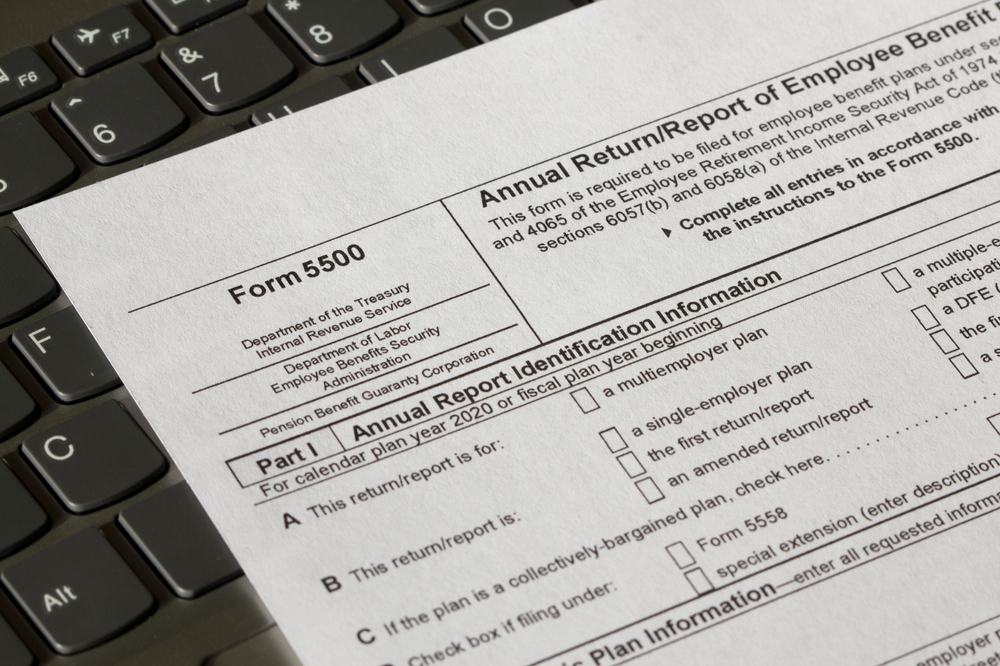
Retirement plan compliance can become a serious business issue for Phoenix employers when annual filings, payroll deposits, participant notices, and plan records do not match. A missed deadline or inaccurate Form 5500 may expose a plan sponsor to federal penalties, corrective costs, and closer regulatory review.
Quick Answer
For 2026, the Department of Labor can assess up to $2,739 per day when a plan administrator fails or refuses to file a complete and accurate Form 5500. The IRS may impose separate penalties, depending on the form and violation. Common enforcement concerns include late participant contributions, incomplete filings, prohibited transactions, missing plan audits, unexplained financial discrepancies, and failures affecting participant benefits.
What Phoenix-area Plan Sponsors Should Know
-
Calendar-year plans generally must file Form 5500 by July 31, unless a valid extension applies.
-
A late or incomplete filing may create exposure under both Department of Labor and Internal Revenue Service rules.
-
Phoenix employers with fluctuating workforces should monitor participant counts because those counts can affect filing and audit requirements.
-
Businesses operating across Scottsdale, Tempe, Mesa, Chandler, and Glendale should use consistent payroll and eligibility procedures across every location.
-
Voluntary correction may reduce penalties when completed before the plan receives an enforcement notice.
What Is Form 5500 and Why Does It Matter?
Form 5500 is the annual federal report used to disclose a benefit plan’s financial condition, operations, participation, and compliance information. The Department of Labor, IRS, and Pension Benefit Guaranty Corporation jointly developed the Form 5500 Series to satisfy reporting requirements under ERISA and the Internal Revenue Code.
For Phoenix employers, Form 5500 is more than an administrative filing. Information reported on the form can be compared with payroll records, plan audits, service-provider data, prior-year filings, and participant complaints.
A filing that is late, incomplete, internally inconsistent, or substantially different from the prior year may lead to questions. Errors can also delay corrective work during an acquisition, plan termination, financial review, or ownership transition.
Fiduciary Advisors, LTD. helps local plan sponsors evaluate retirement plan governance and compliance responsibilities. We work with employers to identify gaps, organize fiduciary processes, and coordinate issues that may require assistance from recordkeepers, third-party administrators, auditors, ERISA counsel, or tax professionals.
What Are the 2026 DOL Penalties for Form 5500 Failures?
The maximum Department of Labor penalty for failing or refusing to file a complete and accurate Form 5500 remains $2,739 per day in 2026. The 2026 Department of Labor adjustment left applicable civil penalty levels unchanged from 2025. The actual assessment is discretionary and depends on the circumstances, but the statutory exposure can grow quickly.
The IRS may impose additional penalties under the Internal Revenue Code. For certain Form 5500-EZ failures, the IRS identifies a potential penalty of $250 per day, up to $150,000 for each late return, plus interest. Form 5500-EZ generally applies to qualifying one-participant and foreign plans rather than ordinary ERISA-covered plans with common-law employees.
Plan sponsors should not assume that outsourcing preparation transfers the legal responsibility. A third-party administrator or recordkeeper may prepare the filing, but the plan administrator remains responsible for reviewing and submitting an accurate report.
What Do Current DOL Enforcement Statistics Show?
Current enforcement data shows that employee benefit plan investigations continue to produce substantial financial recoveries. The Employee Benefits Security Administration reported more than $1.4 billion in direct payments to plans, participants, and beneficiaries during fiscal year 2025, with more than half resulting from enforcement actions.
This figure covers retirement, health, and welfare benefit plans nationwide, so it should not be interpreted as Phoenix-specific retirement plan recovery data. It does show that federal oversight remains active and financially significant.
EBSA conducts civil and criminal investigations involving plan fiduciaries, employers, service providers, investment professionals, consultants, insurers, and other parties that handle plan assets or responsibilities.
For employers in Maricopa County, the practical lesson is straightforward: compliance should be treated as an ongoing governance function, not a form completed once each summer.
What Form 5500 Issues Can Trigger Regulatory Attention?
Form 5500 audit triggers commonly include late filings, incomplete schedules, inconsistent financial information, missing audit reports, and entries suggesting possible fiduciary violations. The DOL states that a late or inaccurate filing can indicate poor plan management and potential risk to participants.
Warning signs include:
-
Form 5500 information does not reconcile with the plan’s trust statements.
-
Participant contributions were deposited later than payroll records indicate.
-
The filing reports unpaid contributions or delinquent participant deposits.
-
Required schedules or attachments are omitted.
-
Participant counts change substantially without a documented business reason.
-
The plan requires an independent audit, but no audit report is attached.
-
Prior-year errors reappear without documented correction.
-
Service-provider compensation or related-party transactions are reported inconsistently.
No single item guarantees an investigation. Regulators may use filing data with participant complaints, referrals, enforcement priorities, prior contact, or information from another agency.
When Is an Independent Plan Audit Required?
An independent qualified public accountant’s audit is generally required for plans with 100 or more participants, subject to applicable transition and small-plan rules. The audit report is normally attached to the Form 5500 and evaluates whether the plan’s financial statements are presented appropriately.
Participant-count rules deserve close attention from growing Phoenix employers. A business expanding from one office near downtown Phoenix into locations in Chandler or the Scottsdale Airpark may cross an audit threshold without realizing it.
The count is not always the same as the number of employees actively contributing. Eligibility, account balances belonging to former employees, and the applicable filing rules can affect the calculation. Plan sponsors should confirm the count with their administrator and auditor well before the filing deadline.
What Are the Most Common Retirement Plan Compliance Problems?
The most common retirement plan compliance problems involve payroll deposits, eligibility, plan-document administration, participant communications, and inadequate fiduciary oversight.
Late participant contributions
Employee deferrals must be separated from employer assets and deposited as soon as reasonably possible under the applicable rules. Repeated deposits made on a fixed monthly schedule may be questioned when the employer has shown it can transmit contributions sooner.
Incorrect eligibility or compensation
Businesses with hourly employees, seasonal staffing, commissions, bonuses, or multiple payroll systems may apply eligibility or compensation definitions incorrectly. This risk can be relevant for hospitality, construction, health care, logistics, and professional-service employers throughout the Valley.
Failure to follow the plan document
A plan may be operated differently from its written terms. Examples include using the wrong matching formula, failing to provide required contributions, or excluding compensation that the document requires.
Weak fiduciary documentation
Committee members may meet with providers and make decisions without keeping minutes, comparing fees, documenting investment reviews, or assigning follow-up responsibilities.
Missing participant notices
Required notices may not be delivered on time or retained in a way that demonstrates distribution.
How Can Phoenix Employers Reduce Their Audit Risk?
Phoenix employers can reduce audit risk by reconciling plan data throughout the year and documenting fiduciary decisions before problems appear on Form 5500.
A practical compliance calendar should include:
-
Reviewing payroll deposits after every pay period
-
Testing eligibility data when employees change locations or classifications
-
Reconciling payroll, recordkeeper, and trust information quarterly
-
Reviewing fees and investment performance at documented committee meetings
-
Confirming participant-notice deadlines
-
Checking the participant count before engaging an auditor
-
Beginning Form 5500 preparation several months before the deadline
-
Retaining records supporting every material entry on the filing
Phoenix companies often grow across several Valley communities while keeping centralized payroll or human resources functions. That structure can create inconsistencies when managers in Mesa, Tempe, or Glendale classify employees differently. A documented, companywide process is safer than relying on local custom at each workplace.
Can a Late Form 5500 Be Corrected Before Penalties Escalate?
A late Form 5500 may qualify for reduced penalties through the Department of Labor’s Delinquent Filer Voluntary Compliance Program when the sponsor acts before receiving certain enforcement notices. The program allows eligible plan administrators to file overdue reports and pay reduced civil penalties.
Participation generally requires filing each delinquent Form 5500 or Form 5500-SF through EFAST2, marking the DFVC Program filing indicator, and submitting the required payment.
The IRS generally provides related late-filing penalty relief for eligible Form 5500 filers who properly satisfy the DOL program’s requirements. That relief does not automatically resolve unrelated failures, such as missing Form 8955-SSA filings, operational defects, prohibited transactions, or unpaid excise taxes.
A sponsor should assess the full compliance picture instead of treating the late return as an isolated clerical problem.
What Mistakes Should Plan Sponsors Avoid?
Plan sponsors should avoid assuming that a service provider has complete responsibility for filing and compliance.
Mistake: Waiting until July to reconcile plan records.
Consequence: Missing data may not be resolved before the deadline.
Better approach: Begin reconciliation during the first quarter.
Mistake: Signing the return without reviewing schedules and attachments.
Consequence: Incorrect information becomes the plan administrator’s filed report.
Better approach: Compare the draft with payroll totals, trust statements, prior filings, and the audit.
Mistake: Correcting one late filing without checking earlier years.
Consequence: Additional delinquent or inconsistent reports may remain unresolved.
Better approach: Review the complete filing history.
Mistake: Treating committee discussions as sufficient documentation.
Consequence: The sponsor may struggle to demonstrate a prudent process.
Better approach: Keep agendas, minutes, reports, decisions, and assigned action items.
What Does a Common Phoenix Compliance Scenario Look Like?
A common Phoenix compliance scenario begins when a growing employer discovers that its participant count, payroll data, and Form 5500 records no longer align.
For example, a company may add employees through expansion into Scottsdale and Chandler, change payroll vendors, and retain former employees with plan balances. During filing preparation, the sponsor learns that an audit may be required and that several payroll deposits need review.
This is not a case study or a description of a specific client. It illustrates why workforce growth, systems changes, and unresolved former-employee accounts should be reviewed before the filing season.
What Retirement Plan Compliance Support May Be Needed?
Retirement plan compliance support may include fiduciary governance, investment oversight, fee review, filing coordination, operational correction, and professional referrals.
We help plan sponsors clarify responsibilities, establish review calendars, document committee decisions, and evaluate whether plan providers are delivering the information needed for informed oversight. Legal conclusions, tax corrections, plan audits, and formal filings should be handled by the appropriate qualified professionals.
How Should Plan Sponsors Compare Their Compliance Options?
Plan sponsors should compare immediate filing needs with the broader risk of unresolved operational or fiduciary problems.
A do-it-yourself review may be reasonable for confirming deadlines, locating prior filings, and gathering payroll reports. Professional coordination becomes more valuable when records do not reconcile, an audit is missing, contributions were late, regulators have contacted the plan, or multiple years may require correction.
A short-term approach focuses only on submitting the current return. A stronger long-term approach creates repeatable controls for payroll, participant data, committee reviews, provider monitoring, and annual filing preparation.
Which Areas Does Fiduciary Advisors, LTD. Serve?
We support retirement plan sponsors in Phoenix and surrounding Maricopa County communities. Our local service area may include employers in Scottsdale, Tempe, Mesa, Chandler, and Glendale, subject to the scope of the requested engagement.
What Is the Cost of Ignoring Form 5500 Problems?
Ignoring Form 5500 problems can increase penalties, correction expenses, professional fees, transaction delays, and fiduciary exposure. It may also make it harder to reconstruct records after staff turnover, payroll changes, a merger, or the departure of a service provider.
Prompt review does not guarantee that penalties or corrective work will be avoided. It gives the sponsor more time to identify available correction programs, gather reliable records, and coordinate an informed response.
Frequently Asked Questions
When is Form 5500 due for a Phoenix retirement plan?
A calendar-year retirement plan generally must file Form 5500 by July 31 following the end of the plan year. An eligible plan may request an extension, commonly through Form 5558. Sponsors should verify that the extension was properly submitted and should not assume that a corporate tax-return extension automatically resolves every plan filing requirement.
Is the 2026 DOL Form 5500 penalty really $2,739 per day?
Yes, the maximum applicable DOL penalty remains $2,739 per day in 2026. The amount is a maximum rather than an automatic daily charge in every case. The DOL has enforcement discretion, and voluntary correction programs may offer reduced penalties when eligibility requirements are satisfied.
Can a Phoenix employer be audited because of Form 5500 errors?
Yes, Form 5500 errors can contribute to regulatory scrutiny, although an error does not automatically cause an audit. Incomplete filings, unexplained inconsistencies, missing attachments, late contributions, participant complaints, and repeated reporting problems may attract attention when reviewed with other available information.
Do small retirement plans in Maricopa County file Form 5500?
Many small ERISA-covered retirement plans must file Form 5500-SF or another applicable Form 5500 Series return. Filing obligations depend on plan type, participant count, assets, ownership, and other factors. Owner-only plans may fall under different Form 5500-EZ rules.
Does hiring a third-party administrator remove the sponsor’s liability?
No, hiring a third-party administrator does not remove the plan administrator’s responsibility to review the filing. Providers can perform essential administrative work, but the sponsor should confirm that reported contributions, participant counts, plan features, financial information, schedules, and attachments are complete and accurate.
What should a Scottsdale or Tempe employer review before filing?
Employers should review participant counts, payroll deposits, compensation definitions, eligibility, trust activity, service-provider compensation, prior-year entries, and required attachments. Companies with workers across multiple locations should also confirm that employee classifications and payroll procedures are applied consistently.
Can the DFVC Program correct every retirement plan violation?
No, the DFVC Program primarily addresses eligible delinquent annual reports and related filing penalties. It does not automatically correct operational failures, fiduciary breaches, prohibited transactions, late participant contributions, missing participant statements, or every IRS reporting issue. Those matters may require separate analysis and correction.
How long should a Phoenix plan sponsor retain Form 5500 support?
A plan sponsor should retain records long enough to satisfy applicable ERISA, tax, audit, and plan-administration requirements. Because different records can be subject to different retention rules, sponsors should establish a written policy with qualified legal, tax, audit, and administrative professionals rather than discarding documents under a single general deadline.
Strengthen Your Phoenix Retirement Plan Compliance Process
A complete Form 5500 is one part of a well-governed retirement plan. Consistent payroll controls, documented fiduciary reviews, accurate participant data, and timely correction procedures can help Phoenix employers reduce avoidable compliance risk.
Protect Your Plan, Participants, and Fiduciary Process
We help local plan sponsors organize retirement plan oversight before filing discrepancies become larger problems.