
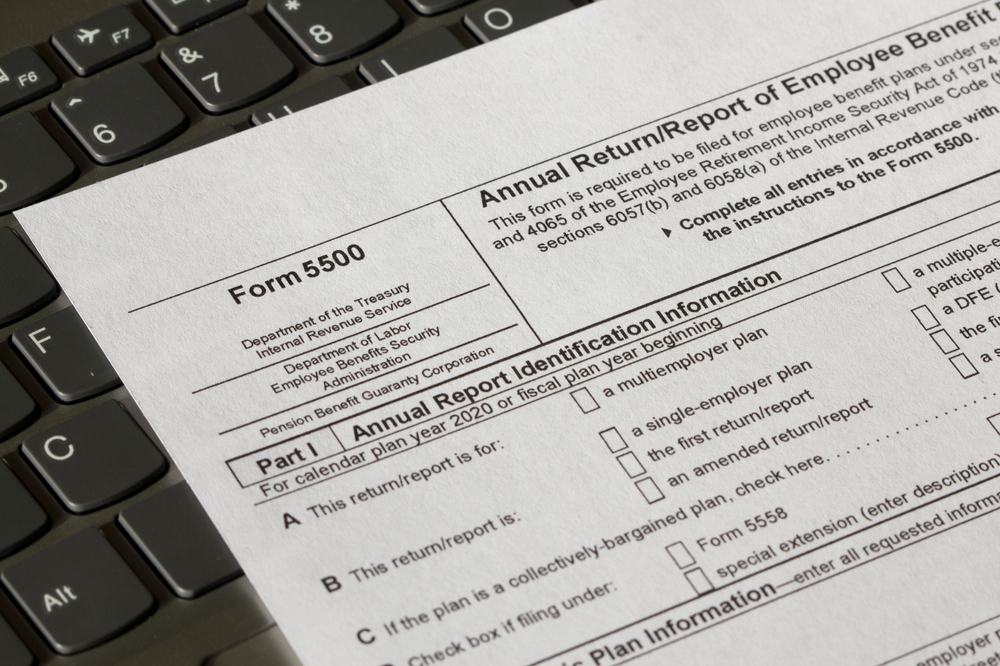
Every year, accounting firms across the country brace themselves for the same recurring challenge: helping clients navigate the complexities of Form 5500 filings. For firms in Phoenix and throughout the Southwest, this annual ritual can strain internal resources, test client relationships, and expose everyone involved to serious regulatory risk. Whether you are managing a handful of retirement plan clients or overseeing a large portfolio of benefit plans, the pressure to file accurately and on time never lets up.
The good news is that with the right pension consulting partnerships and a clear understanding of ERISA audit protection requirements, your firm does not have to face this challenge alone. This guide breaks down the five most critical areas where accounting firms struggle with Form 5500 compliance and explains how to build a system that actually works.
Why Form 5500 Help Is in Such High Demand
Form 5500 is not a simple tax document. It is a comprehensive annual report that retirement plan sponsors must file with the Department of Labor, the IRS, and the Pension Benefit Guaranty Corporation. The form captures everything from plan financials and participant counts to compliance testing results and details about plan service providers.
For accounting firms, the challenge is that clients rarely have the internal expertise to manage this process themselves. They rely on their CPA or accounting advisor to either handle the filing directly or coordinate with third-party administrators and pension consultants. When something goes wrong, including a late filing, an inaccurate participant count, or a missing required attachment, the penalties can be severe.
The DOL can assess penalties of up to $250 per day for late filings, with a maximum of $150,000 per plan year. The IRS has its own separate penalty structure. For small businesses with tight margins, these fines can be devastating, and the reputational damage to the accounting firm that was supposed to be guiding them can be equally serious.
This is why Form 5500 help has become one of the most valued services that accounting firms can offer or coordinate for their business clients.
The Intersection of ERISA Audit Protection and Financial Risk
One of the most misunderstood aspects of retirement plan compliance is the audit threshold. Under ERISA, plans with 100 or more eligible participants at the beginning of the plan year are generally required to include an independent qualified public accountant audit with their Form 5500 filing. This is where ERISA audit protection becomes critical for both the plan sponsor and the accounting firm advising them.
Many plan sponsors are surprised to learn they have crossed the audit threshold. A business that has been growing steadily may suddenly find itself subject to full-scope ERISA audit requirements without any prior warning from their benefits administrator. Without proper tracking and proactive communication, this can result in a filing that is either non-compliant or filed without the required audit opinion.
For accounting firms, this creates both a risk and an opportunity. The risk is obvious: advising a client without flagging the audit requirement exposes the firm to liability. The opportunity is that firms equipped to provide or coordinate ERISA audit services can position themselves as indispensable compliance partners rather than just annual tax preparers.
A proactive approach means monitoring participant counts throughout the year, not just at filing time. It means having a clear referral or in-house process for engaging qualified ERISA auditors well before the Form 5500 due date, which is generally the last day of the seventh month after the plan year ends, with extensions available.
How Pension Consulting Transforms Your Client Advisory Role
The firms that handle Form 5500 season most effectively are almost always the ones that have invested in strong pension consulting relationships. Pension consultants bring specialized knowledge that goes far beyond what a general-purpose accounting firm can realistically maintain in-house.
A qualified pension consulting partner can assist with plan design review, contribution calculations, nondiscrimination testing, and the preparation of the Form 5500 itself, including all required schedules. For accounting firms, this means you can offer comprehensive retirement plan support to your clients without hiring a dedicated internal ERISA specialist.
The relationship between an accounting firm and a pension consultant works best when communication is ongoing rather than reactive. Rather than scrambling at the end of the plan year to gather data, the most effective firms establish regular touchpoints throughout the year. This allows potential issues, such as a failed nondiscrimination test or a plan document that has not been restated to reflect recent law changes, to be identified and corrected before they become filing problems.
In the Phoenix market specifically, the growth of mid-sized businesses in sectors like healthcare, technology, and professional services has created significant demand for sophisticated retirement plan consulting. Accounting firms that can connect clients with top-tier pension consulting resources have a clear competitive advantage.
Building a Repeatable Compliance Process That Protects Your Firm
Surviving one Form 5500 season without a major problem does not mean your process is sound. The firms that consistently deliver clean filings year after year are the ones that have built repeatable, documented compliance workflows. Here is what that looks like in practice.
First, create a master calendar that tracks every client’s plan year end date, audit threshold status, and filing deadline. This calendar should be reviewed quarterly, not just in the months leading up to filing season. Second, establish clear engagement letters that define the scope of your firm’s responsibility versus the responsibilities of the plan’s third-party administrator and any pension consulting partners. Ambiguity about who is responsible for what is one of the leading causes of compliance failures.
Third, build a data request checklist that you send to clients at least 90 days before their filing deadline. This checklist should include everything from updated participant census data to plan financial statements and any required audit documentation. Fourth, assign a dedicated team member or partner to serve as the primary liaison with each pension consulting relationship. Consistent communication with your consulting partners reduces errors and speeds up the overall process.
Fifth, implement a final review step before any Form 5500 is submitted. This review should confirm that all required schedules are attached, that participant counts are consistent across all sections of the form, and that the filing reflects any corrections or plan amendments made during the year.
Why Phoenix Accounting Firms Are Rethinking Their Approach
Phoenix has become one of the fastest-growing business markets in the United States, and that growth is bringing new complexity to the retirement plan landscape. As companies scale and employee headcounts increase, many plan sponsors in the Phoenix area are discovering for the first time that their benefit plans require professional compliance oversight they have never needed before.
This is creating a meaningful opportunity for accounting firms that are willing to invest in building out their retirement plan compliance capabilities. Firms that can offer seamless coordination of Form 5500 help, ERISA audit protection, and pension consulting services are finding that clients are willing to consolidate more of their advisory work with a single trusted partner.
The competitive pressure to provide these services is also increasing. Larger national firms have long offered integrated benefit plan compliance services, and regional firms that cannot match this capability risk losing clients to competitors. Building strong relationships with specialized pension consultants and ERISA auditors is one of the most cost-effective ways for a mid-sized Phoenix accounting firm to close that gap.
Conclusion
Form 5500 compliance does not have to be the most stressful part of your firm’s year. With the right combination of pension consulting partnerships, proactive ERISA audit protection monitoring, and a disciplined internal process, accounting firms can turn this annual challenge into a genuine service differentiator. For firms in Phoenix and beyond, the time to build that infrastructure is before the next filing season begins, not during it.
Need Pension Consulting & Pension Plans in Phoenix, AZ?
Fiduciary Advisors, Ltd. is a business-to-business associated pension administrator based in Phoenix, Arizona, since 1990. We specialize in designing and planning employee retirement programs, pensions, profit sharing, and are third-party administrators for 401K for small- to medium-size businesses. We conduct enrollment meetings, prepare detailed actuarial calculations, cash-balance plans, and financial consultation for all businesses. Give us a call today for more information!